
In doing some initial research I found that many of Native American tribes were nomadic and thus hunters and gatherers. Obviously, their diets consisted of game, fish, berries, nuts, etc., things they could find as they traveled. I don’t know when the tribes in the Midwest started “gardening” but its the food of these people I would like to focus on, at least initially, as they are most likely my ancestors.
In working with the recipes I found the question of using “European” ingredients came up. If I strictly used only Native American sourced ingredients the food would be very boring, at least to my taste. No heat, no spices, and very few herbs make for some pretty bland food. I understand Native Americans ate strictly for the nutrition, but in our modern day society most of us eat for taste, in addition to fuel for our bodies. So my strategy is to substitute as few ingredients as possible, and add in a little bit of herbs and spices enough to make the food appealing to me.
Some of the traditional Native American recipes that I found had ingredients that I couldn’t easily obtain, or just weren’t things I would actually eat. One traditional soup/stew recipe from the Haudenosaunee (Iroquois) Nation did appeal to me though. It is based on the “three sisters”, three vegetables that grew well together: maize (corn), beans and squash. These three vegetables were planted close together and like close sisters aided one another in their growing processes. Corn has a high need for nitrogen and beans produce a high amount of nitrogen. Climbing beans need something to climb and a corn stalk acts as a natural trellis. The squash plants spread and covered the ground, which helped with moisture retention and acted as a weed barrier.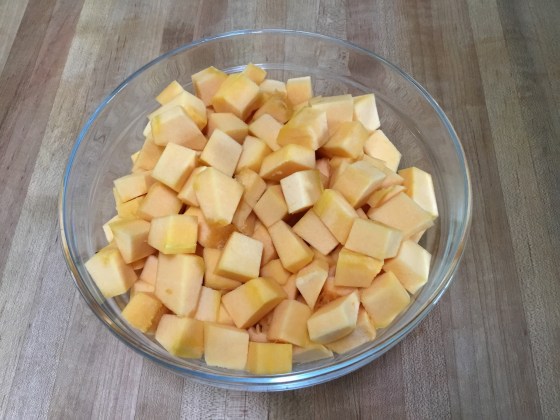
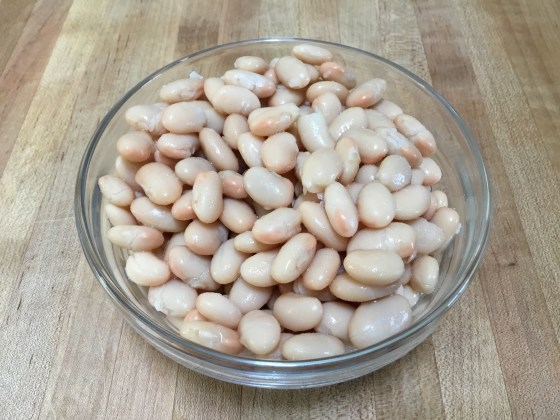
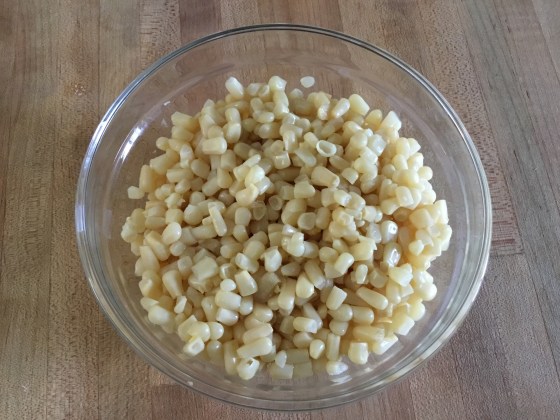 So far I’ve made several “three sisters” stews, always with white corn, either canned or frozen, but experimented with different beans and squash. The combination with acorn squash and white cannelini beans was my favorite.
I started all recipes by sautéing a handful of chopped onions in either olive oil or coconut oil. I prefer the coconut oil as it gave a little sweetness to the stew. I then added the “three sisters” all at once and added only enough water to cover the vegetables. You could some of the water with vegetable or chicken stock if desired. I usually add dried crushed sage leaves at that time, also. Cook until the vegetables still have a slight firmness to them. Serve with salt and pepper to taste.
I used an equal amount of each vegetable, including the onions, in all my stews, but you can mix it up. The Native Americans would have used whatever combination they had available. They would have dried their own beans and corn and with squash having a fairly long sleeve life if stored properly, could have prepared this recipe through most of the year. Any winter squash will work, but I preferred butternut or acorn. Any bean will work , but I prefer softer shelled beans, like cannelini. I always used white corn, but yellow corn, or hominy will work as well.
This is very basic recipe and can be transformed into a soup or baked casserole dish with slight modifications.
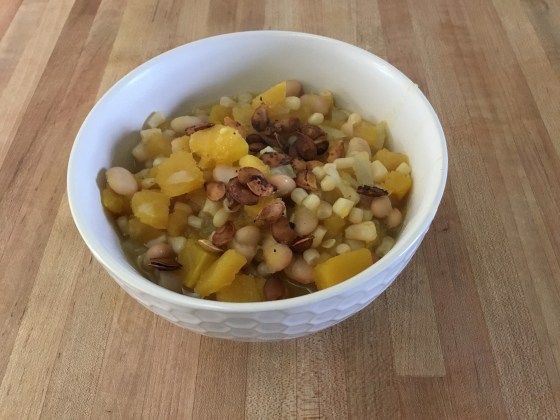 Three Sisters Stew garnished with roasted squash seeds
 Low Country Gypsy